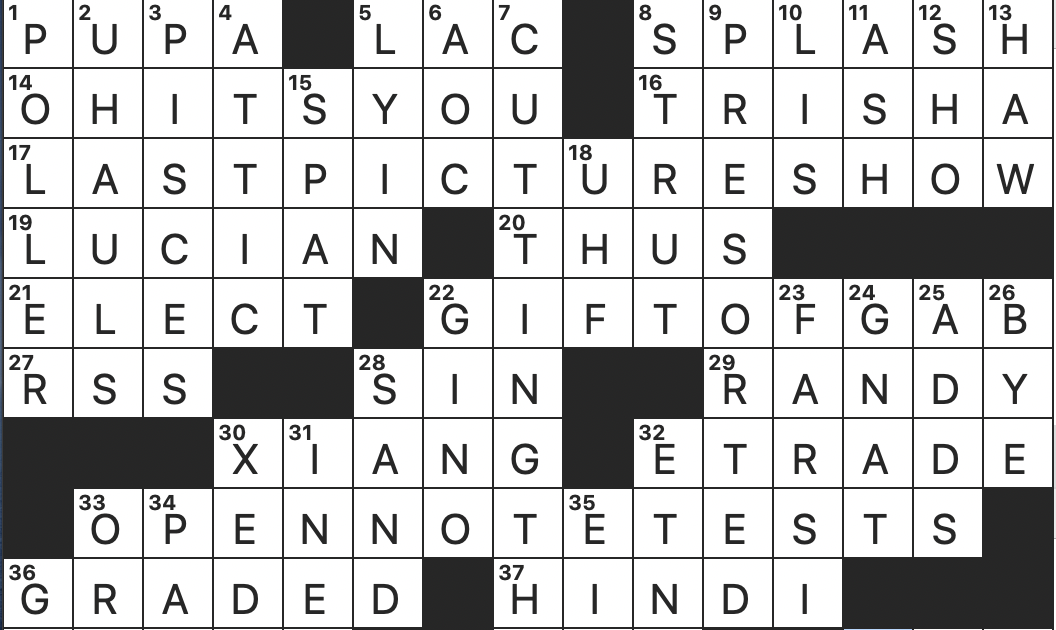
When delving into the rich tapestry of ancient Hellenic culture, few aspects are as foundational as its language. The Greek language, in its ancient forms, wasn't a monolithic entity but rather a vibrant collection of regional variations. For anyone tackling a crossword puzzle with the clue "Dialect of ancient Greece," one answer often emerges as the frontrunner, embodying the cultural and intellectual zenith of its time: Attic Greek.
Attic Greek: The Voice of Classical Athens
Attic Greek is not just another dialect; it represents the linguistic pinnacle of classical antiquity. Spoken predominantly in Attica, the region surrounding the city-state of Athens, this dialect became the vehicle for some of the most profound ideas and artistic expressions in human history. Its prominence stems directly from the unparalleled cultural output of Athens during its Golden Age, roughly the 5th and 4th centuries BCE.
Why Attic Stands Out: The Athenian Connection
The ascendancy of Attic Greek is inextricably linked to Athens itself. As the birthplace of democracy, philosophy, and classical drama, Athens fostered an environment where intellectual and artistic endeavors flourished. Consequently, the works produced during this era — the philosophical dialogues of Plato and Xenophon, the historical accounts of Thucydydes, and the timeless tragedies of Aeschylus, Sophocles, and Euripides, along with the comedies of Aristophanes — were all penned in Attic Greek. This vast body of literature cemented Attic Greek's status as the literary standard, making it the most studied and best-preserved form of ancient Greek.
Its geographical origin in Attica also played a crucial role. Situated on a peninsula, Athens held a strategic position that facilitated trade and cultural exchange, yet its dialect retained a distinctive character. Unlike some more geographically isolated dialects, Attic benefited from being at the heart of the Greek world's intellectual powerhouse.
Linguistic Legacy: Features and Influence
Attic Greek possessed distinct linguistic features that set it apart from its counterparts. While a detailed grammatical analysis is beyond the scope of a general article, some characteristics include:
- Sound Changes: Attic typically converted ̄̂ ('a' with circumflex) into η (eta) in many cases where other dialects retained α (alpha). For instance, Ionic had ἰλια (hēlia) for 'sun,' while Attic adopted ἢλια (hēlia).
- Absence of the Digamma (Ϝ): Unlike earlier forms of Greek and some other dialects, Attic had lost the sound represented by the digamma (a 'w' sound) by the classical period.
- Specific Word Forms: While sharing much vocabulary with other dialects, Attic had its own preferred word choices and morphological forms.
- Relative Simplicity: In comparison to some of the more archaic dialects, Attic is often seen as having a relatively streamlined grammatical structure, which perhaps contributed to its widespread adoption.
Perhaps its most significant legacy is its role as the foundation for Koine Greek, the common dialect that emerged during the Hellenistic period following the conquests of Alexander the Great. As Greek culture and language spread across the known world, Attic served as the basis for this new lingua franca, which became the language of the New Testament and the administrative language of the Roman East. This transformation underscores Attic's enduring influence, shaping not only ancient literature but also the linguistic landscape for centuries to come.
Navigating the Crossword: "Dialect Of Ancient Greece Crossword Clue"
For crossword enthusiasts, the clue "Dialect of ancient Greece" is a classic. While many dialects existed, "ATTIC" is frequently the expected answer, largely due to its prominence and its five-letter length. The reasons explored above—its association with Athens, its literary legacy, and its role as a linguistic ancestor—make it a strong contender in any such puzzle.
Attic vs. Doric: A Crossword Conundrum
However, an interesting twist sometimes emerges. While "ATTIC" is a highly probable solution, some crossword puzzles might point to "DORIC" as the answer for the very same clue. Doric was another major dialect group, spoken in regions like Sparta, Crete, and parts of the Peloponnese. It's known for its more archaic features and its association with choral lyric poetry.
Why this ambiguity? Crossword setters often have multiple valid answers for a clue, relying on other intersecting clues, the specific length of the word required, or even a particular theme to guide solvers. Both Attic and Doric are prominent dialects of ancient Greece and both happen to be five letters long. This is where a solver's deeper knowledge of Greek history and linguistics, or simply careful attention to surrounding clues, becomes vital.
For a deeper dive into this specific challenge and to understand the nuances that might lead a puzzle to favor one over the other, you might find it helpful to explore Attic vs. Doric: The Ancient Greek Dialect Crossword Challenge. And if you're looking for strategies to confidently Solve 'Dialect of Ancient Greece' Crossword Clue: Attic or Doric?, those resources offer further insights.
Practical Tips for Solving Related Crossword Clues:
- Check Letter Count: Both Attic and Doric are five letters. If the required answer length is different (e.g., three letters for "Ionic"), it immediately narrows down possibilities.
- Look for Intersecting Clues: The most reliable way to differentiate is often through letters provided by other completed words in the puzzle.
- Contextual Hints: Sometimes, a clue might offer a subtle hint, such as "Dialect of Plato" (Attic) or "Spartan dialect" (Doric).
- Commonality: In the absence of other hints, Attic is generally the more frequently sought answer due to its widespread historical and literary documentation.
Beyond the Crossword: The Enduring Impact of Attic Greek
The significance of Attic Greek extends far beyond being a mere crossword answer. It represents a living link to the intellectual foundations of Western civilization. Through the lens of Attic Greek, we gain direct access to the thoughts of philosophers who shaped ethics, politics, and metaphysics; to historians who documented foundational conflicts; and to playwrights who explored the depths of the human condition.
Key Figures and Works Preserved in Attic Greek:
- Philosophy: The Socratic dialogues of Plato, the logical and ethical treatises of Aristotle (though his own writings show signs of the developing Koine), and the practical wisdom of Xenophon.
- History: Thucydides' History of the Peloponnesian War and Xenophon's Anabasis and Hellenica.
- Drama: The tragedies of Aeschylus (e.g., Oresteia), Sophocles (e.g., Oedipus Rex), and Euripides (e.g., Medea), as well as the comedies of Aristophanes (e.g., Lysistrata).
- Oratory: The powerful speeches of Demosthenes and Lysias, crucial for understanding Athenian legal and political life.
Studying Attic Greek offers not just linguistic insight but also a direct portal to understanding the democratic ideals, philosophical inquiries, and artistic achievements that continue to resonate in contemporary society.
Other Notable Ancient Greek Dialects
While Attic and Doric stand out for their prominence or as common crossword answers, it's important to remember that the ancient Greek linguistic landscape was diverse. Other significant dialects included:
- Ionic Greek: Closely related to Attic, Ionic was spoken in Ionia (western Asia Minor) and the Aegean islands. It's famous as the language of Homer's epics (though with some archaic features) and the historian Herodotus.
- Aeolic Greek: Spoken in Thessaly, Boeotia, and the island of Lesbos, Aeolic is known for its lyrical poetry, particularly the works of Sappho and Alcaeus.
- Arcado-Cypriot Greek: A more conservative dialect group spoken in Arcadia and Cyprus, showcasing older features of the Greek language.
Each of these dialects contributed to the rich tapestry of ancient Greek culture, offering unique literary and historical perspectives.
In conclusion, while the "Dialect of ancient Greece crossword clue" might occasionally throw a curveball with "DORIC," "ATTIC" remains the most recognized and historically significant answer. Its intimate connection to Athens' Golden Age, its robust literary legacy, and its foundational role in the evolution of Greek language underscore its paramount importance. Understanding Attic Greek is not just about solving a puzzle; it's about unlocking a direct conversation with the minds that shaped Western civilization, allowing us to appreciate the enduring power of language and its profound impact on human thought and culture.